
A low-priced ceramic tile can become the expensive choice at checkout. Missing bullnose, forced trim packs, carton rounding, and duplicate freight can consume the field-tile saving before thinset reaches the wall. The right comparison is one complete delivered order.
Ceramic and porcelain can both work on residential tub-surround walls
Glazed ceramic and porcelain can both serve a conventional residential tub surround when the manufacturer approves the selected SKU for shower-wall use. Porcelain’s lower absorption does not waterproof the surround or automatically justify a higher delivered cost.
What does ANSI A137.1 say about ceramic and porcelain water absorption?
The Ceramic Tile Education Foundation identifies ANSI A137.1 as the manufacturing standard for ceramic tile. CTEF identifies ANSI A108/A118 and the TCNA Handbook as installation resources and says consumers can purchase those documents. Check a current licensed copy for exact absorption classifications, porcelain criteria, terminology, and test methods.
| Order check | Glazed ceramic | Porcelain |
|---|---|---|
| Wet-wall use | Require written shower-wall approval | Require written shower-wall approval |
| Product data | Check absorption classification and edge type | Check porcelain designation and edge type |
| Layout data | Record actual size, thickness, caliber, and grout joint | Record actual size, thickness, caliber, and grout joint |
| Cost test | Price field cartons and coordinating trim | Price field cartons, profiles, and freight |
Nominal size is not a cutting schedule. The technical sheet should state actual facial dimensions, thickness, edge type, recommended grout joint, and approved application. Wall approval also does not establish floor slip performance. Floor specifications belong in a separate review of bathroom flooring slip resistance and waterproofing.
CTEF also describes allowable-lippage limits under ANSI A108 as dependent on grout-joint width for qualifying pressed floor and porcelain tile. The cited limits are 1/32 inch for joints from 1/16 inch to less than 1/4 inch and 1/16 inch for joints at least 1/4 inch wide. Those figures concern lippage under stated conditions, not waterproofing or trim quantities. CTEF recommends qualified contractors familiar with current standards and identifies CTI and ACT credentials as indicators of installation knowledge.
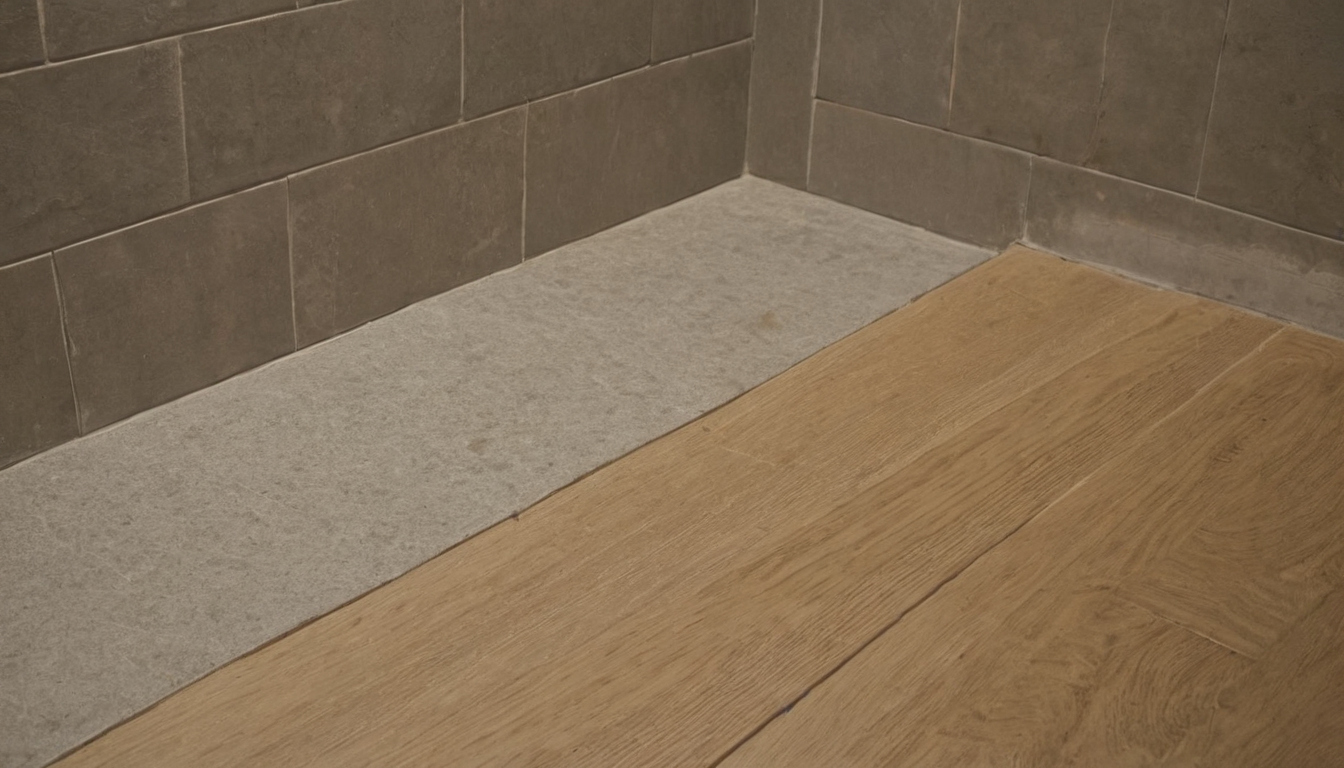
Ceramic and porcelain can both work on residential tub-surround walls shown as an editorial reference for proportion and finish coordination.
A shower-wall rating does not make the tile assembly waterproof
Tile and grout are finish materials. The specified backer, membrane, treated seams, sealed penetrations, tub-flange transition, and changes-of-plane treatment manage water behind the finish. Follow the waterproofing manufacturer’s instructions for thinset, sealant, coverage, and cure time.
Some installation products emit volatile organic compounds. The U.S. Environmental Protection Agency identifies building materials among common indoor VOC sources and recommends increased ventilation while VOC-emitting products are used. Good inspection light matters too. ENERGY STAR states that qualified LED lighting uses at least 75 percent less energy and lasts up to 25 times longer than incandescent lighting when those products are applicable.
Once both tile candidates pass the wall-use test, quantity becomes the next purchasing question.
How much field tile does a three-wall tub surround require?
Start with measured wall area, then convert each wall into modules using actual tile dimensions and the planned grout joint. Layout loss, breakage stock, repair stock, and carton rounding are separate lines. A guessed waste percentage is not a takeoff.
Gross wall area is only the first line of the tile takeoff
This illustrative surround has a 60-inch back wall, two 30-inch end walls, and a 72-inch tiled height from the finished tub deck. These are example assumptions, not standard finished dimensions. Settle the room through small-bathroom layout and fixture dimensions before ordering.
| Surface | Calculation | Gross area |
|---|---|---|
| Back wall | 60 × 72 inches | 30 square feet |
| Two end walls | 60 × 72 inches | 30 square feet |
| Total | 120 × 72 = 8,640 square inches | 60 square feet |
Keep valve and spout holes in the field area because they create cuts rather than useful deductions. Calculate a window or niche separately. A niche removes opening area but adds a back, returns, perimeter cuts, and trim.
Actual tile dimensions and grout joints determine the piece count
Record actual facial size, thickness, caliber, recommended joint, orientation, and bond pattern. Credit an offcut only when its dimensions and edge position allow reuse. A stacked layout and running bond can produce different corner cuts from the same square footage.
Waste, spare stock, and carton rounding are separate quantities
- Count non-reusable cuts from each wall elevation.
- Add a breakage allowance supported by the manufacturer, retailer, or installer.
- Reserve identified full pieces for repairs.
- Divide the final piece count by pieces per carton and round to whole cartons.
- Check coverage, minimum quantities, and return rules.
The field count still leaves the expensive edge question.
The trim map should be finished before the field tile is selected
Complete the trim map before approving a field tile. Count every exposed leg, top termination, niche return, window return, pony wall, and outside corner. Piece-priced bullnose can erase a ceramic discount.
Which tub-surround edges need bullnose or another finished profile?
Mark exposed edges on the plan and wall elevations. In the illustrative surround, two 72-inch front legs require 144 linear inches of edge treatment. If tile stops at 72 inches, the 60-inch back and two 30-inch ends can add 120 linear inches of top termination.
- List each vertical leg, top edge, niche perimeter, window return, cap, and outside corner.
- Assign bullnose, quarter-round, mud-cap, stone sill, cut tile, or profile to every line.
- Record actual length, finish code, pack quantity, price unit, stock status, cut allowance, and spares.
- Confirm that each coordinating trim SKU belongs to the chosen field-tile line.
- Obtain approval before exposing a cut glazed edge. Body color and glaze coverage may make it unsuitable.
Inside corners are movement joints, not a reason to assume matching corner tile is required
Decorative inside-corner tile is product-specific. It does not replace the movement joint where tiled walls change plane. Check current project guidance and follow the tile, waterproofing, sealant, and profile manufacturers’ instructions for joint width, backing material, and compatibility.
Do not pack a change of plane with rigid grout because the catalog lacks a ceramic corner. Price optional cove and corner shapes as decorative components, not movement-joint substitutes.
A metal edge profile is a priced substitution, not free trim
A metal or PVC profile can solve missing bullnose, but its complete order needs a price. Match profile depth to tile thickness. Count stock lengths, corners, connectors, end caps, finish codes, and freight restrictions.
With the trim schedule complete, the decision moves to the checkout basket.
Compare the delivered tub-surround order, not the field-tile price
The winning tile has the lower complete pretax delivered cost. Compare both baskets with the same wall geometry, layout, spare-stock rule, and delivery method. Record the date and delivery ZIP code because stock and freight terms can change.
The complete-order table reveals whether ceramic actually saves money
| Order line | Glazed ceramic | Comparable porcelain |
|---|---|---|
| Field cartons after rounding | Enter captured subtotal | Enter captured subtotal |
| Bullnose and trim packs | Enter captured subtotal | Enter captured subtotal |
| Profiles, corners, and end caps | Enter captured subtotal | Enter captured subtotal |
| Freight, delivery, or pickup | Enter charges | Enter charges |
| Pretax delivered total | Calculate | Calculate |
| Cost per installed square foot | Total ÷ fixed wall area | Total ÷ fixed wall area |
A useful quote needs dated retailer product pages and cart captures. Record SKU, carton coverage, pieces per carton, trim price, pack quantity, availability, delivery charge, and return terms. Sales tax stays separate because the rate depends on location.
Freight and pack quantities can reverse the field-price result
Check split shipments, special-order restrictions, free-shipping exclusions, damage claims, and return freight. Test each basket with one additional field carton and one additional trim pack. Individually sold bullnose may control cost. A forced case of trim may erase the apparent saving.
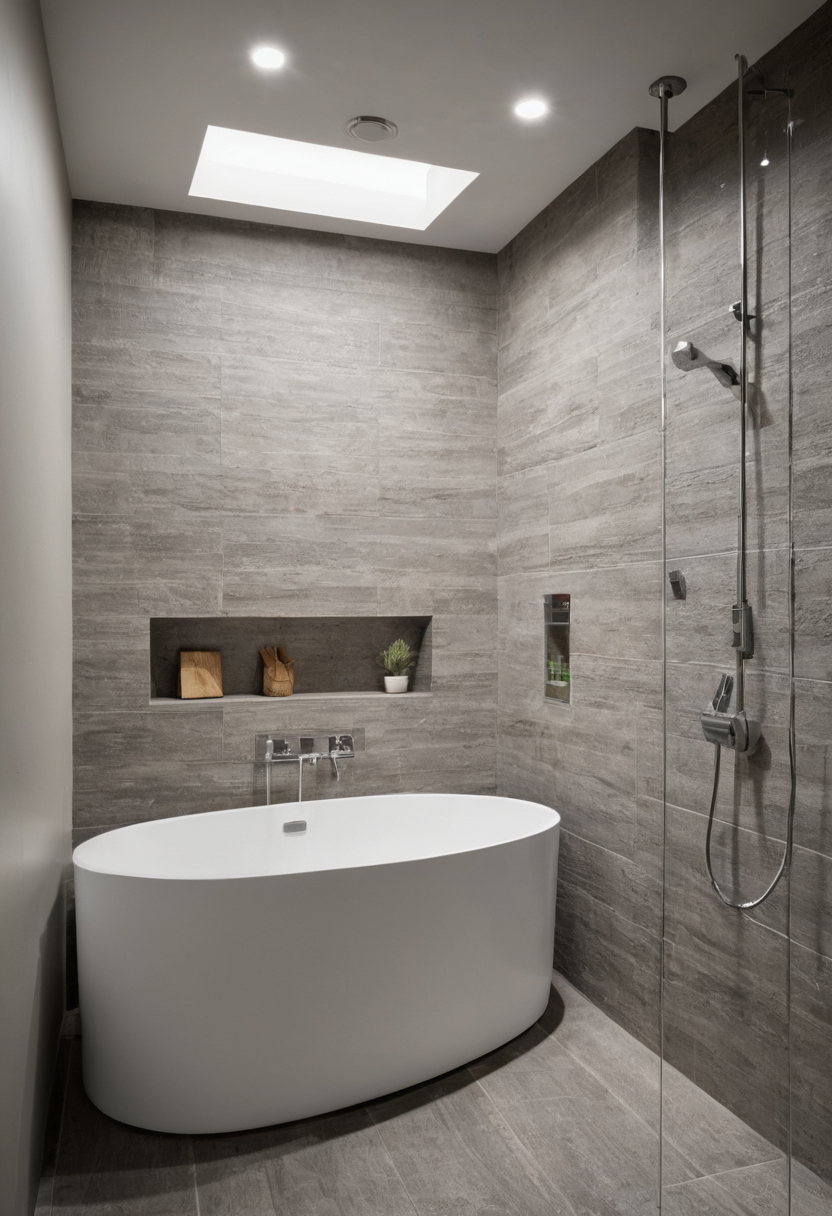
Compare the delivered tub-surround order, not the field-tile price shown as a planning reference for layout, scale, and material decisions.
The next reduction comes from selecting modules that fit the walls.
The most economical bathroom tile ideas use modules that fit the walls
Economical bathroom tile ideas begin with module and edge cost. Tile size, grout joints, orientation, offset, and niche position control scraps and trim lengths. A dearer field tile can produce the cheaper surround when its module needs fewer cartons.
Tile design ideas should begin with the wall module
Calculate with actual tile size plus the grout joint, not the nominal carton size. Map centered and edge-start layouts. Confirm acceptable end-cut widths with the installer. For pressed or large-format tile, follow the manufacturer’s permitted offset because warpage can restrict some half-offset layouts.
Horizontal and vertical layouts can cover equal wall area but require different course counts and cuts. Recalculate whole-carton rounding for both. Do not choose orientation from a sample board alone.
A niche adds perimeter trim even when it removes field-tile area
Record niche width, height, depth, shelf count, and position in the grout grid. Count the back, returns, shelves, perimeter profiles, corner fittings, and waterproofing components. Compare a no-niche basket with a complete niche basket rather than subtracting only the opening.
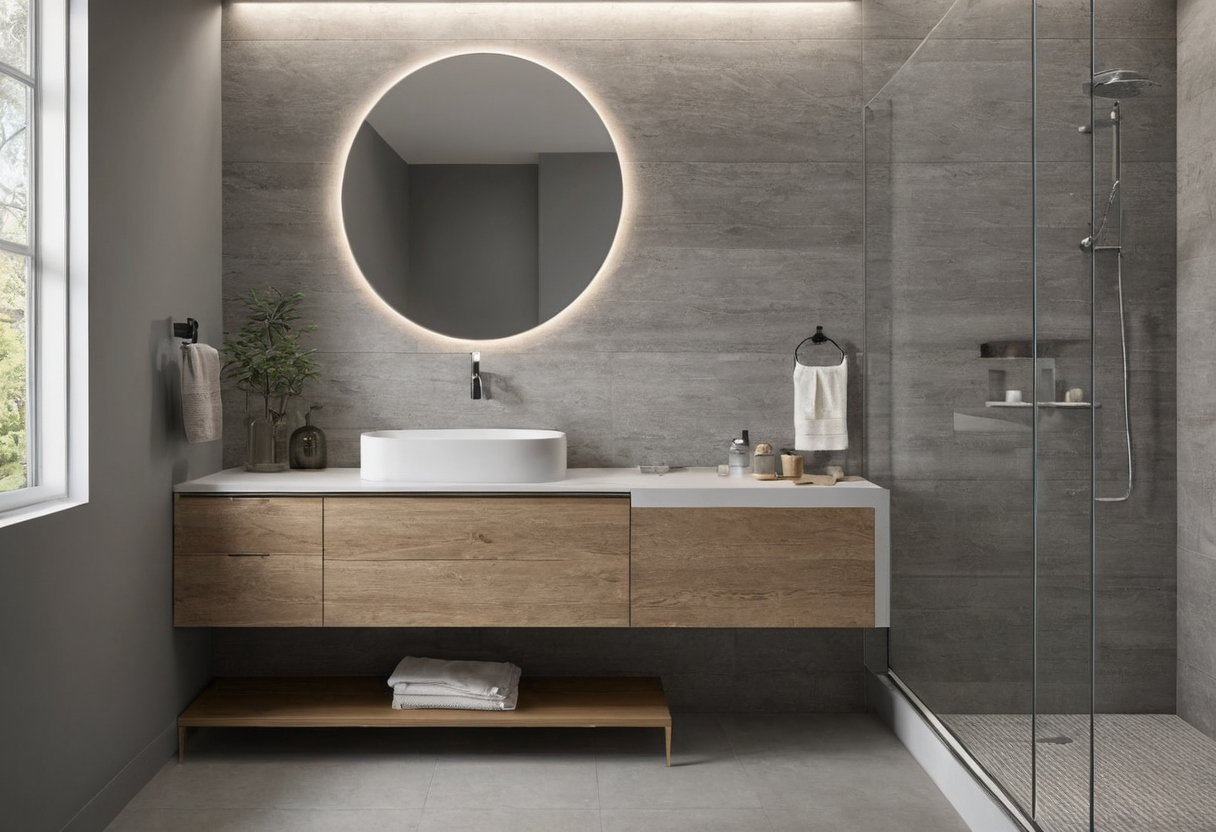
The most economical bathroom tile ideas use modules that fit the walls shown with finish, fixture, and clearance relationships visible.
Poor waterproofing can leave damp spots. The U.S. Environmental Protection Agency advises fixing wet or damp spots promptly to help prevent mold growth. Once the module works, the order needs a final technical and delivery check.
A tub-surround tile order needs one final technical and delivery check
Submit the order only after the technical sheet, trim schedule, quantities, lot controls, return terms, and delivery plan agree. One coordinated purchase lowers duplicate-freight and shortage risk.
What must be verified before the tile order is submitted?
Attach manufacturer documents and the retailer basket to the order sheet. Ask the installer to approve measurements, layout, edge treatments, movement joints, and compatibility. Reconcile field cartons, bullnose, profiles, corners, thinset, membrane, sealant, and grout.
Confirm thickness, recommended grout joint, shade variation, caliber, and production-batch markings where applicable. Obtain written pickup, freight, return, damage-claim, lead-time, and replacement terms, especially for special-order trim.
Inspect field tile and trim before installation begins
Photograph the pallet before unwrapping. Note visible freight damage on the carrier paperwork when possible. Count cartons and trim, then compare finish codes, dimensions, and lot markings. Inspect chipped trim, bowed pieces, and shortages before thinset is mixed.
Do not install visibly defective material while a claim remains open. Replacement tile may differ in shade or caliber. Approve the delivered bill of materials, not the square-foot label.
Frequently asked questions
When ordering tile for a three-wall tub surround, how much extra should I order?
Do not apply a universal percentage. Count layout cuts, non-reusable offcuts, expected breakage, repair stock, and whole-carton rounding separately. Have the installer or manufacturer support the allowance.
What are the downsides of ceramic tile on shower walls?
Some ceramic lines have limited bullnose, exposed body-colored edges, or fragile trim. Ceramic remains practical when the SKU is wall-approved and the complete trim basket works.
Should there be a gap between tile and bullnose or metal trim?
Use the grout or movement space required by the tile, profile, sealant, and installation specifications. Do not force tile tightly against a profile without checking those instructions.
Do inside corners require matching ceramic corner pieces?
No. Decorative corner pieces are optional and product-specific. The change of plane still needs the specified movement-joint treatment.
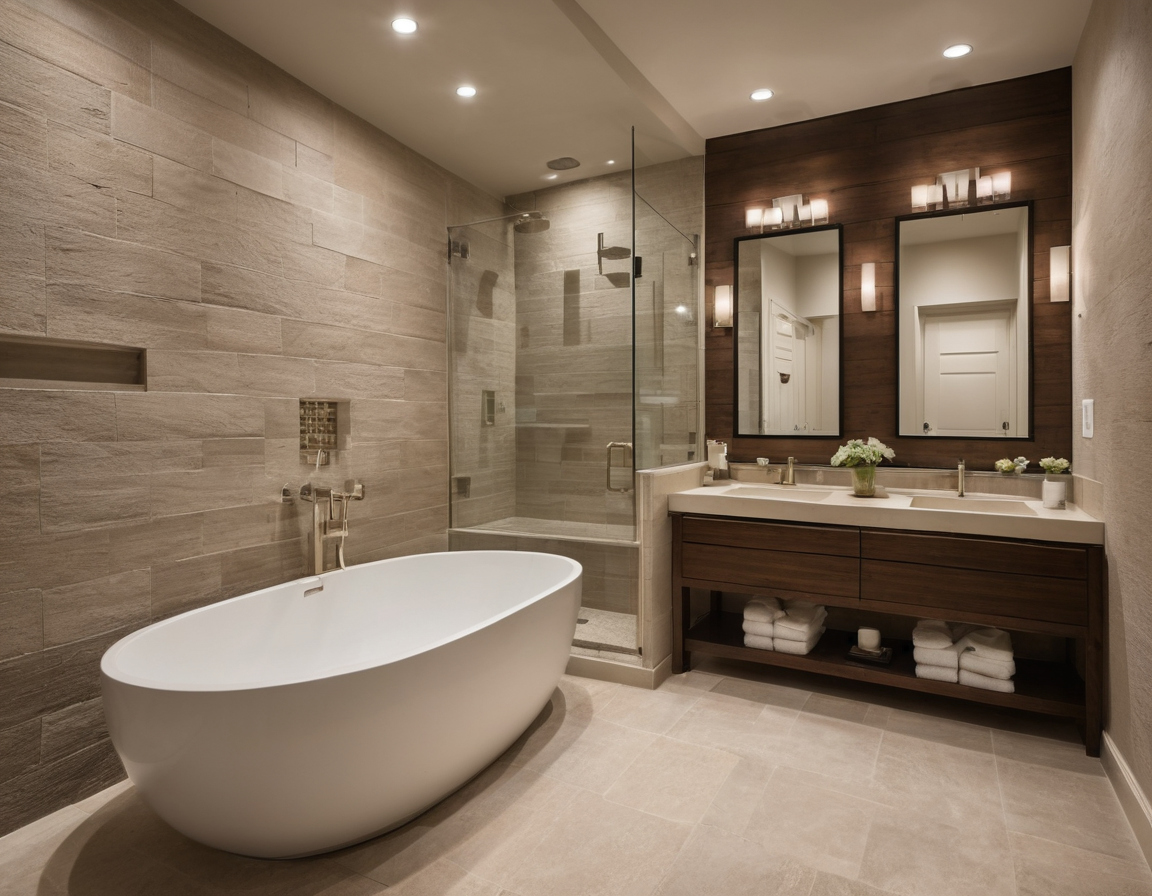
A tub-surround tile order needs one final technical and delivery check shown as an editorial reference for proportion and finish coordination.
When is porcelain worth more than cheaper ceramic?
Porcelain is worth the premium when its approved application, module, available profiles, carton rounding, and delivered total produce the better complete order. The field price alone cannot answer that question.